Sunday, August 30, 2015

Paragraph on "Good Manners"

What are Good Manners?

What we need in life is to look like the real human being. Good manners are those best qualities which make a man look perfect. To look civilized good manners are very essential. Good upbringing brings wonderful results for making us well mannered. It is true that one who has been brought up in a good environment will have likable manners. What are good manners? We should be kind towards the weak and old people wherever we find. We must avoid vanity and pride. We must simply say kind words to others such as pleas, thank you, sorry, excuse me. We must congratulate others on their achievements. We should always remember to greet others. These words show that we are social, civilized, well-mannered and educated. Gentle speech is the necessary part of good manners. We should never be harshness to anyone. It is a sign of one's mental shallowness.. As far as our character is concerned we should be humble and polite. Humbleness and politeness cost us nothing but the results these qualities bring are amazing in one's life. In short our good manners are courtesy, truthfulness, hard work, punctuality, cleanliness, discipline and dutifulness.If we possess these and such more good qualities which are compatible to our social norms and religious values we will be respected and honored everywhere.


Paras, schools, students, writing practice, creativity, mannerism, colleges, life's tips, hssc, fbise, gik college, English learning 

Saturday, August 29, 2015

Essay - Threats to Mankind Today

Threats to Mankind Today 
(Essay Given in HSSC 2 English Paper 2015)

Never did in the whole past history, mankind was so insecure as we see it now in the present age. In spite of having so much progress made in various fields of life, man lack his peace of mind and physical insecurity. Man used to enjoy his life in free peaceful nature but his greatest enemies were natural disasters. To harness the forces of was his first victory of mankind. With the passage time man made development in science for sake of human services but at the same time he also invented subversive elements. I would like to describe them one by one.

1. Nuclear War
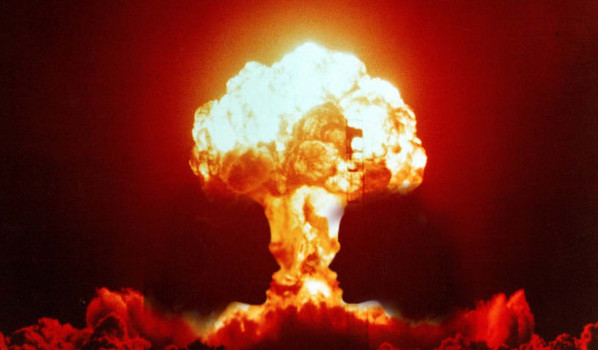
Man has build the world after great hard work and sacrifices but the same other men are destroying it with the excuse of self-security.Nuclear weapons have been invented and they may be used sooner or later. A nuclear war is one, which is fought not with the conventional weapons but with the most modern nuclear weapons. We can read the black pages of history that the world has seen only once the use of nuclear weapons and its extremely dangerous consequences. It was back in August 1945 when America dropped nuclear weapons on Hiroshima and Nagasaki - the two great cities of Japan.

2. Global Warming 

Another big threat to mankind is global warming. It is a gradual increase in the overall temperature of the earth's atmosphere generally attributed to the greenhouse effect caused by increased levels of carbon dioxide, CFCs, and other pollutants.Our beautiful earth is getting warmer and warmer day by day. Such warming is not a matter of a day or two but such changes are expected to grow and speed up as the time passes. Within the next fifty to one hundred years, the earth may be hotter than it has been in the past million years. All the oceans are getting warm and glaciers are melting, land and cities along coasts may be inundated. Excessive heat and drought may cause forests to die and food crops to fail. It is going to bring about climatic changes and is affecting weather, plants, animals, people everywhere. 


3. Terrorism
At present time the much worst thing people is terrorism in most of the countries of the world where once only peace existed. We can define terrorism as the use of violence to achieve some goals by the terrorists. It is completely different from war and policy. We can say that it the amalgamation of cold war and hot war at the same time. The evils of terrorism have badly affected not only the underdeveloped countries but also the most developed countries where all kinds of remedial measures and trained soldiers may be at work but even there bomb explosions, discriminate killings, hijacking, kidnapping blackmailing etc. What is the aim of terrorism? It is against whom they regard as their enemies or those who the terrorists consider as their obstacles in the path of their goals. In some countries terrorists are more trained and have the deadlier weapons the law enforcing agencies. Terrorists never considered their evil activities as terrorism but they think it as their heroism. There is a well-known and popular saying about terrorism that ‘A freedom fighters of nation are the terrorists for another one." To put an end to terrorism we need to join hands internationally.


4. Super Volcanoes
Another big threat to man from nature. There are volcanoes, and then there are super-volcanoes. "Approximately every 50,000 years the Earth experiences a super-volcano. More than 1,000 square kilometers of land can be obliterated by pyroclastic ash flows, the surrounding continent is coated in ash and sulphur gases are injected into the atmosphere, making a thin veil of sulphuric acid all around the globe and reflecting back sunlight for years to come. Daytime becomes no brighter than a moonlit night.”

5. Space War - Aliens From The Outer Space
If it is true that life exists somewhere in the outer space and those creatures have the ability to land on our earth, they should be welcomed but if they are the hostile ones, then we feel a great danger at their hands.

Remedial Measures and Conclusion
What should we do to avoid these threats to mankind? What measures should we take? For all these threats we need unity, harmony and fraternity. We, as one mankind, need to fight for our own as well as the coming generations against those who are evil-minded and those natural negative processes. We are awfully required to join hands.

Friday, August 28, 2015

Voluntary and Involuntary Actions

Voluntary and Involuntary Actions

There are two main types of actions carried out by our body - voluntary action and involuntary action. 

Voluntary Actions
Voluntary actions are those actions which our brain can control consciously such as picking a book off a floor kicking a ball. We do not have to do these things. Nerve impulses reach our brain and analyzed before we decide what action to take. In the case of picking up the book, the brain sends motor impulses along with the nerve fibers that run down the spinal cord. These make synapses with motor fibers which enter the spinal nerves and send messages to the sets of muscles needed to bring about the correct action. Many sets of muscles in our arms, legs, and body are brought into play in order to stoop and pick up the book. Impulses passing between our eyes, brain, and arm direct our arm to the right place and tell our fingers when to close on the book. 

Involuntary Actions
Involuntary actions are those that our brain does not consciously control. For example such as digestion, breathing, sweating and heart beat are involuntary, so too are the adjustment of the lenses and pupils of the eyes. The nerves which control the involuntary actions are known as autonomic nervous system. The reflex actions described in the previous posts are also involuntary actions.


Poem No. 2 - Night Mail (HSSC 1)

HSSC -1, FBISE, English Notes
Poem No. 2 - Night Mail

This is the night mail crossing the Border, 
 Bringing the cheque and the postal order, 
 Letters for the rich, letters for the poor, 
 The shop at the corner, the girl next door. 
 Pulling up Beattock, a steady climb: 
 The gradient's against her, but she's on time. 
 Past cotton-grass and moorland boulder 
 Shovelling white steam over her shoulder, 
 Snorting noisily as she passes 
 Silent miles of wind-bent grasses. 
 Birds turn their heads as she approaches, 
 Stare from bushes at her blank-faced coaches. 
 Sheep-dogs cannot turn her course; 
 They slumber on with paws across. 
 In the farm she passes no one wakes, 
 But a jug in a bedroom gently shakes.


The poet describes the beautiful movement of the train and its work. He tells in the poem that Night Mail crosses the border between Scotland and England. It brings cheques and letters. for different classes of people. It brings letters and messages to the rich and poor, shopkeepers and girls in their homes.This is a simple poem highlighting the different characteristics of a night mail. It brings various types of postal material for each kind of people. It also passes through various fields, meadows, and ups and downs to reach its destiny. Night mail actually resembles life that passes through different courses to reach its destiny. "The Night Mail" brings different kinds of postal material. It passes through different ups and downs.   The Night continues moving forward whatever the terrain or type of land may be. It stops at Beattock after climbing to it at a normal height. It climbs up the hilly land even if it is high, and reaches the station on time. It goes past cotton-like grass and open wasteland with stone hills. It throws off white steam above its body and makes noise through its pipes. It passes over many miles by the grasses bent over under the pressure of the wind. As the Night Mail comes near the birds just turn their heads away and only look at the fields, not caring about her movements.

Even the people in their cottages go on sleeping as the Night Mail passes by the field, Jugs or utensils and the cottages shake slowly with her noise, and nothing more happens.

What are Nerve Cells?

Nerve Cell


Nerve cells carry impulses in one direction only. Impulses travel from sense organs such as the eye, ear and skin into central nervous system (the brain and spinal cord) along sensory nerve cells. Impulses then travel along connecting nerve cells to motor nerve cells, which carry them to muscles. A reflex action is a simple example of nerve cells in action.


Receptors
Information about your surrounding is collected by receptor cells.These are usually grouped together in sense organs. Each type of receptors is sensitive to a different kind of change or stimulus. The table below shows the human sense organs, the senses, and the stimulus to which they are sensitive.

Sense Organs
Sense

Stimulus
SkinTouchPressure, pain, hot and cold temperature
TongueTasteChemicals in food and drink
NoseSmellChemicals in the air
EyesSightLight and color
EarsHearing
Balance
Sound
movement and position of the head

Reflexes
The spinal cord is more than just a high speed route for electrical impulses to and from the brain. The spinal cord can control some of your actions without the brain being used at all. Sometimes you do not have time to think - in an emergency you must act right away. If for example you touch something hot, you quickly pull your hand away without stopping to think what to do.  

Reflex Actions
Reflex Action protects us from injury. What happens is this: impulses travel from the pain receptors in you finger along a sensory nerve cell to spinal cord. Here they pass along connections which lead them to a motor nerve cell. This carries the impulses to the muscles, which pull the finger away from the painful stimulus. A similar spinal reflex operates when you stand on something sharp.

There are also reflexes in which the impulses are sent straight to the brain. These are called cranial reflexes. Examples include blinking when a piece of dust lands in your eyes, sneezing and producing saliva when you smell food.


Thursday, August 27, 2015

Poem No. 1 - The Rain (HSSC-1)

FBISE, HSSC - 1, English Notes
Poem No. 1 - The Rain (HSSC-1)
Summary, Theme, Paraphrase, Questions and Answers

I hear leaves drinking rain; 
I hear rich leaves on top 
Giving the poor beneath 
Drop after drop; 
‘tis a sweet noise to hear 
These green leaves drinking near. 
And when the sun comes out, 
After this rain shall stop, 
A wondrous light will fill 
Each dark, round drop; 
I hope the sun shines bright; 
It will be a lovely sight. 
(W.H. Davies)

The Theme of the Poem "The Rain"
It is a beautiful poem written in simple language by W.H Davies. The poem really gives a picture of nature with musical display of rain which is a great phenomenon of nature. It is not only a poem with simple direct meaning but it has also a symbolic meaning. According to the poet the leaves on the upper level get the rain drops first and quench their thirst. And then they pass on the drops to the leaves at the level beneath. Here we have some underlying meaning. These lines may give a metaphorical meaning too; the rich people at the upper level get a valuable opportunity first and whatever remains trickles bit by bit down to the poor people at the level beneath.  By using the images rain and sunlight, the poet actually presents the reality of life. Life is a blend of joy and sorrow. Nevertheless, the scene of the sunshine afterwards, is wonderfully lovely and fascinating. It is a great source of of pleasure to everyone of us. 

Paraphrase of the Poem "The Rain"
The poet hears the leaves which are full of rain. The rich leaves on top are full of water. The sprinkling of water which falls drop by drop on the leaves below creates a music which is sweet to hear. When the sun appears again after the rain stops, the wonderful light sparkles each drop. In the end, he wishes to have the sun shines in full brightness and make the scene lovelier.

Critical Appreciation of the poem "The Rain"
In this poem the poet has chosen a beautiful phenomenon of nature - rain. The poet says that he hears the leaves drinking the water of raindrops whose falling sound produces beautiful and pleasant music. On the one hand, the rain presents the great beauty of natural phenomenon but on the hand, the poet is worried about the poor man who is sitting under the tree. Thus he shivers with cold becomes shelterless. Then the poet says that when the rain stops and the sun appears, everything looks beautiful and wonderful again. Each drop of rain seems to be like a shining gem creating a lovely sight. In this poem we find that the sorrows and pleasures go side by side. Change is always there. Nothing remains the same forever. 

Wednesday, August 26, 2015

Correct Errors in the Given Paragraph No. 2


Correction of Mistakes


Q. Correct the following errors in all. Then rewrite the paragraph as you have revised it. (errors in the use of verb, noun number, preposition, incorrect spelling, missing article, missing infinitive, missing adjective.)

Paragraph
We should not value the gold so much as wisdom. We can get lot of wealth and property suddenly, but they are of no benefit for us if we do not put them to a proper use. We can start living to a luxury without winning the sympathy and love of others. Friends will start disappearing fastly, and time will come when people will begin to avoid us.

Errors Indicated in the above Paragraph
We should not value the gold so much as wisdom. We can get lot of wealth and property suddenly, but they are of no benefit for us if we do not put them to a proper use. We can start living to a luxury without winning the sympathy and love of others. Friends will start disappearing fastly, and time will come when people will begin to avoid us.

Correction Made in the Given Para
We should not value gold so much as wisdom. We can get lots of wealth and property suddenly, but they are of no benefit to us if we do not put them to a proper use. We can start living to luxury without winning the sympathy and love of others. Friends will start disappearing fast, and a time will come when people will begin to avoid us.


Essay on "Faisal Mosque"

 The Faisal Mosque is one of the most iconic landmarks of Islamabad, the capital city of Pakistan. It is one of the largest mosques in the w...