Showing posts with label Poems. Show all posts

Sunday, January 31, 2016

Poem No. 20 - In Broken Images

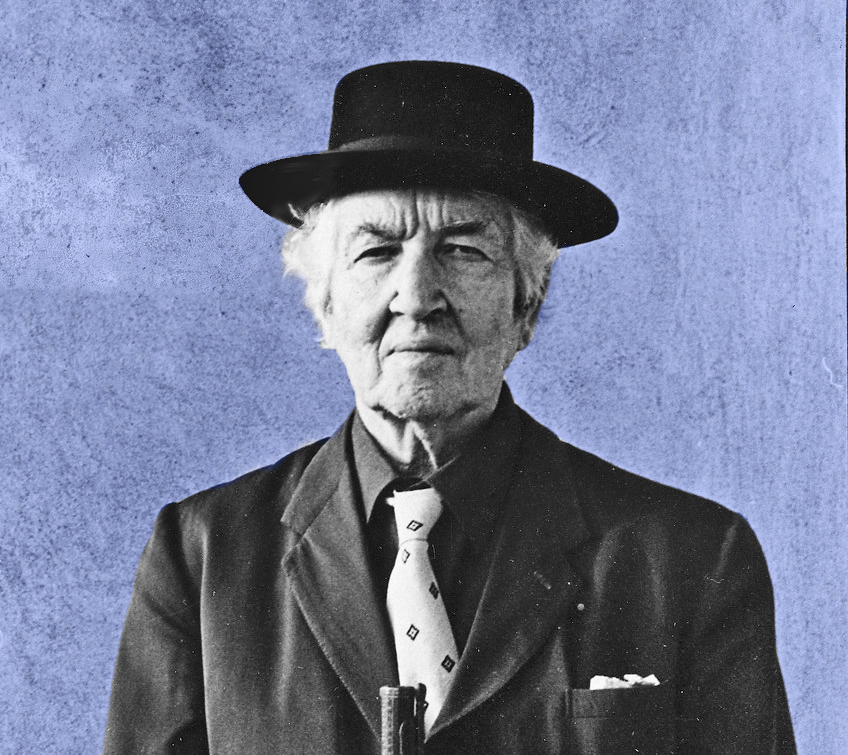
Robert Graves 

He was born in 1895 in Wimbledon, a suburb of London. He worked in many capacities. He was known as a poet, lecturer and novelist. He was also known as a classicist and a mythographer. His first known and revered poems were the poems Graves wrote behind the lines in World War One. He later became known as one of the most superb English language 'Love' poets. He then became recognised as one of the finest love poets writing in the English language. 

In Broken Images 

 He is quick, thinking in clear images;
 I am slow, thinking in broken images.
He becomes dull, trusting to his clear images;
I become sharp, mistrusting my broken images,
Trusting his images, he assumes their relevance;
Mistrusting my images, I question their relevance.
Assuming their relevance, he assumes the fact,
Questioning their relevance, I question the fact.
When the fact fails him, he questions his senses;
When the fact fails me, I approve my senses.
He continues quick and dull in his clear images;
I continue slow and sharp in my broken images.
He in a new confusion of his understanding;
I in a new understanding of my confusion.

What does the poet mean in his poem?
In this poem, Robert Graves the poet tries his best to give us the two different types of approaches towards life. The one who keeps on working continuously and keep on finding the solutions to problems. He should not be overconfident and have a selective view of life. One is the blind follower of the ready truths and concepts concocted either by the religion, politics, or society while the other believes in analysing and questioning what appears to be either a fact known or explained already by these institutions or a mystification or question needs to be resolved and determined by this person. The slow person becomes sharp whereas the sharp becomes dull by what he already knows. 

Explanation of "In Broken Images"
In this poem, Graves compares his reasoning to that of another person. He is of the view that the other person is able to solve problems faster than he is able to but he considers this as a weakness. This leads to his overconfidence.  It is a weakness according to Graves because there is too much trust placed on the already learnt or know facts.  The rules become second nature to the students, and the students succeed as a result. However, the important thing is to actually be able to understand why something is a rule or a “fact” because many rules have exceptions to them. Graves highlights the point that eventually the rules you were taught or the “facts” you were taught will fail and that is when it will have paid off to have analyzed every piece of information that was received.   

Theme of The Poem (Given in the textbook of first year)
A person should remain inquisitive about the images of life whether they are broken or clear. One, who trusts one’s clear images without proof, becomes dull in one’s life whereas the other who mistrusts his broken images becomes sharp and intelligent. Nothing should be taken for granted and one should remain thoughtful and considerate about the facts of life. Inquiry into the nature of things leads one to understand and accept the ground realities of life.

Wednesday, January 20, 2016

Poem No. 19 - A Man of Words and Not of Deeds

A Man of Words and Not of Deeds 
Written By Charles Perrault (1628-1703)

A man of words and not of deeds, 
Is like a garden full of weeds, 
And when the weeds begin to grow, 
It’s like a garden full of snow. 
And when the snow begins to fall, 
It’s like a bird upon the wall. 
And when the bird away does fly, 
It’s like an eagle in the sky. 
And when the sky begins to roar, 
It’s like a lion at the door. 
And when the door begins to crack, 
It’s like a stick across your back. 
And when your back begins to smart, 
It’s like a penknife in your heart. 
And when your heart begins to bleed. 
And when your heart begins to bleed, 
You’re dead and dead and dead indeed. 
(Charles Perrault 1628-1703) 
Translated by Robert Samber

Vocabulary
A man words: A man who only talk without any practical involvement
Weeds: Unwanted wild plants
Roar: Roar Loud, deep sound as of a lion
Smart: Feel or cause a sharp pain
Penknifea small knife with a blade which folds into the handle.
Bleed: lose blood from the body as a result of injury or illness.
Indeedused to emphasize a statement or response confirming something already suggested.

Summary:

This poem is written by Charles Perrault and translated by Robert Samber. He says that a man who always talks and boasts, and does not do anything practically in any deed which beneficial for mankind is like a garden full of weeds. And when his this habit is once grown, it further aggravates the situation like snow in winter. Life passes through different phases and he is liked by no one in his social circle. Thus he finally comes to an end with the death of a person. It is, therefore, necessary that a man must always engage himself in some fruitful activity to make the life pleasant and useful for humanity. The poem gives us a lesson to be practical in every aspect of life.

Theme
One who is always busy in talking with excessive pride and self-satisfaction about one's achievements, and is not involved in any deed is like a garden full of weeds. And when it is once grown it further aggravates the situation like snow in winter. Life passes through different passes and ultimately comes to an end with the death of a person. It is , therefore necessary that a man must always engage himself in some fruitful activity to make the life pleasant and useful for humanity.

Moral Lesson
The poem "A Man of Words and Not of Deeds" teaches us that we should not waste our precious time in talking only. We should not misguide others by only showing ourselves as talketive. We should be practical and do positive actions for the sake of serving humanity.


Monday, January 18, 2016

Poem No. 17 - The Delight Song

The Delight Song


Who Was N. Scott Momaday?
His full name is Navarre Scott Momaday who was born in Lawton, Oklahoma, He used to spend earlier years at his grandparents' home where his father was born and raised. When he was just one year old, his parents moved to Arizona. By profession, Scott's father was a painter. His mother became an author of children's books which were like by the people. Both his parents worked as teachers on Indian reservations when Scott was growing up, and the boy was exposed not only to the Kiowa traditions of his father's family but to the Navajo, Apache and Pueblo Indian cultures of the Southwest. Momaday early developed an interest in literature, especially poetry. When he did his graduation from the University of New Mexico, and a year of teaching on the Apache reservation at Jicarilla, he won a poetry fellowship to the creative writing program at Stanford University. Under the guidance of poet and critic Yvor Winters, Momaday earned a doctorate in English literature in 1963, and accepted a teaching post at the University of California at Santa Barbara. As his doctoral dissertation, he edited and annotated the Complete works of the 19th century American poet Frederick Goddard Tuckerman. It was published by Oxford University Press in 1965.

The Delight Song (Video)
 

I am a feather on the bright sky
I am the blue horse that runs in the plain
I am the fish that rolls, shining, in the water
I am the shadow that follows a child
I am the evening light, the lustre of meadows
I am an eagle playing with the wind
I am a cluster of bright beads
I am the farthest star
I am the cold of the dawn
I am the roaring of the rain
I am the glitter on the crust of the snow
I am the long track of the moon in a lake
I am a flame of four colors
I am a deer standing away in the dusk
I am a field of sumac and pomme blanche
I am an angle of geese in the winter sky
I am the hunger of a young wolf
I am the whole dream of these things
You see, I am alive, I am alive
I stand in good relation to the Gods
I stand in good relation to the earth
I stand in good relation to everything that is beautiful...
You see, I am alive, I am alive
Navarre Scott Momaday

Summary of the Poem "The Delight Song"
It is a poem in which we find that the poet feels alive, active and smart. He enjoys the brightness of the sky, running on the plain ground, sight of the fish swimming in the water and so on. He takes great delight in looking at the activities of the birds, changes in during the day and night, and the different natural phenomena like rainfall and snowfall. He feels that he is in happy relationship with all that is on earth such as the shadow of a child, the cold of dawn, the glitter of snow and flame of fire. He is in harmony with everything. 

Paraphrase of Stanza No. 1

I am a feather on the bright sky
I am the blue horse that runs in the plain
I am the fish that rolls, shining, in the water
I am the shadow that follows a child

I am like as light as a feather of a bird flying in the sunny sky. I am like the horse free of worries running on the plain ground. I am as active as a fish. I am the shadow of a child which has no worries. He takes part in the life and activities of these phenomena.


Sunday, January 17, 2016

Poem No 14 - My Neighbour Friend Breathing His Last


Who is Bhulla Shah?

The original name of Bhullah was Abdullah Shah. He was born at Uch Gilanian (Bahawalpur) in the family of Syeds. He moved with his father to Qasur. Earliest themes of his poems point to a consciousness (understanding) of two phenomena - an incorrect sense of divinity among the people and their feelings of the position of a divine secret. Bhulla Shah, however, passed this secret within him, which was becoming a kind of pain because it could not be told. At a deeper level, his poetry records the suffering of lonely man, who had seen through appearance of the received faith, and could not feel one with his social surroundings. He understood his faith as love which strains towards a union with God. He felt within him a longing to unite with God whom he took as his beloved on the mystical plane.  He moved towards theological sufism in which God is seen in everything. His 156 kafys (mystical devotional poems) are a supreme expression of his live for and devotion to God.

My Neighbouring friend breathing his last (Poem) 

My neighbours friend breathing his last , 
What should I do,O God,Aghast!
He is to leave, now can't remain,
He is to leave,now cant the train, 
 What should I do, O God, Aghast.

On everyday decamping, 
At every place are shrieks in stock , 
What should I do,O God ,Aghast. 

 Flare up flames in heart to height,
For,visible is not charming sight.
What should I do,O God,Aghast.

 Without His love,Bullah in loss,
Can hardly dwell here or across 
 What should I do,O God,Aghast.

Words' Meanings: 
Aghast: Terrified
Decamping: Going away secretly
Shrieks: Cries
Flare up: Burst into bright flame

Theme of the poem (My Neighbour Friend Breathing His Last)
The death of a neighbour friend terrifies the poet and puts him in a state of shock. The dead leave this world and leave behind the relatives to mourn for them. Everything charming in the world becomes invisible. The only appreciable thing is the love of God without which everyone is at a loss.

Explanation of the Poem (My Neighbour Friend Breathing His Last)
The death of a dear friend is a tragedy for a noble person because he cannot find another friend like him easily. He even wants to die like his friend to keep his company in the other world. He really does not know what he can do or how he can pass his life in the absence of his friend. It is so because he is truly devoted to his friend. 

Anywhere the poet goes after the death of his friend, he feels his absence. Everywhere he sees pain and sorrow expressed by people on the death (or demise) of their near ones. in this hopeless situation, he begins feeling the pains of others as well. Inside him he feels that fire of grief (sadness) is burning which consumes him. Very naturally he begins feeling his nearness to God to get God Almighty's love and mercy. This feeling provides him the much needed support. He decides to live on hopefully and to pass his life as he did earlier. 

HSSC - 1, First Year English

Poem No. 5 - In the street of the fruit stall

HSSC - 1 English Book - 3, Part: Poetry


Title of the poem
In the street of the fruit stall 

Wicks balance flame, a dark dew falls
In the street of the fruit stalls, 
Melon, guava, mandarin, 
Pyramid-piled like cannon balls, 
Glow red-hot, gold-hot, from within. 
Dark children with a coin to spend, 
Enter the lantern’s orbit; find 
Melon, guava, mandarin, 
The moon compacted to a rind, 
The sun in a pitted skin, 
They take it, break it open, let. 
A gold or silver fountain wet, 
Mouth, fingers, cheek , nose chin, 
Radiant as lanterns, they forget, 
The dark street I am standing in.

Words' Meanings: 
Guava: Fruit of a tropical tree with a light yellow skin and pink or white edible flesh.
Mandarin: A type of small orange with a loose skin
Rind: The hard outer skin of certain fruits
Wick: A piece of cord or tape in candle, oil lamp etc.
Pyramid: A large stone structured with a flat square or triangular base and sloping sides that meet in a point at the top
Glow: Shine brightly and warmly in the bright light of lantern
Gold-hot: Shining golden colour
From within: From the inside of fruits the brightness appears to be coming out

The Main Idea of The Poem
In this poem we are told that fruitsellers different fruits in stalls at night. They candles or lanterns to have light. Poor black children buy fruits from them. This shows the social and racial problems of inequality in the Western society. Perhaps the white people and their children are mostly better financially and racially than the poverty stricken people. The piled fruits look like cannonballs in the dim light. They thus become the symbol of war. We spend too much money on warfares and war preparation at the time when so many people are living the life of poverty.

Theme of the Poem ( In the street of the fruit stall)
In the street of the fruit stall is a symbolic poem. The world is threatened with war, misery and poverty. But all these failed to crush man's love for pleasure. Children enjoy the sweet spray of the juice forgetting all about the misery they live in.

Explanation of the Poem 
(In the street of the fruit stall)
As said above, In the street of the fruit stall This is a symbolic poem. The poet shows the main threats of war such as misery and poverty to the war-mongering people of the world. He also makes mention of the innocence of children who are nor aware as to what is going on. He tries to tell us that even the threats of war, misery and poverty cannot crush the human joys, love and innocence. In spite of the impending danger. the children enjoy the sweet juice of fruit being unaware of the dark picture of the world.

The poet depicts the the scene of a fruit street. It is evening time and it is wet and dark. Candles are burning and a dark dew falls there. Many fruits like guava, melon and mandarin are lying there in a conical form. They look like heaps of cannonballs which reflect golden and red colour in the light of lantern. In the second stanza, the poet actually creates a scene of war by comparing the fruit stalls to the different kinds of weapon. 

The poet shows a situation of the threat of war. The words like "burning candles" and "dark dew" create mysterious atmosphere.The sun in a pitted skin. Innocent children enjoy the flavour of fruits without any awareness of what is going on around them. The number of children seems very small. They are so poverty that they all have only one coin to spend. They want to take melon, guava and mandarin. The sun has already set in and the moon is reduced to an arc. The children symbolizes innocence, misery and poverty at the same time. The natural objects like sun and moon also reflect a gloomy effect. The poet brings to light the two major human sufferings of misery and poverty.


Saturday, January 16, 2016

The Main Idea of "He Came To Know Himself"

The poem He Came To Know Himself was written by Sachal Sarmast

In this poem we learn that one who knows himself and also knows that he is an amazing creature in the world created by God cannot have any image and view of any other thing except God who is all-knowing and all-seeing. Man begins  loving Him and in return He blesses him with great love which is the ultimate goal of human life. In this kind of things, everything else is put in the shade and becomes meaningless, and like Mansur, he happy and satisfied, and is will to be hanged on the gallows to get his head cut off only for the love of his beloved God. As a whole the poet is of the view that man's stay on earth is temporary. It is better for a man to have been loved. Briefly, the union of one soul with another soul through the alchemy of love is the highest mystic truth.

He came to know Himself
Naught else had He in view
To be able to realize this
He got enmeshed in love
He alighted from high heaven
To pour a cascade of love
Became Mansur to mount the gallows
Just to have his head cut off.
He treaded the bazaars of Egypt
Just to be sold for a slave
Sachu speaks the bare Truth
To speak of His sojourn on earth.
 (Sachal Sarmast)

Who was Sachal Sarmast and what was his viewpoint about life? 
Sachal Sarmast was was born in Draza near Rani pur in Sindh on 1739. He is considered to be was a great Sufi poet. Many of his poems are sung by many wellknown singers . His poetry is full of life and its realities.He loves God and his poetry shows it. He remained live in his village Draza. His real name was Abdul Wahab. Sachal was his pen name. His father died in his child hood.He was cared by his uncle after it. He married with his uncle's daughter.But she died after two years of marriage.He never again married.He died in 1829.His largest tomb is in Draza village.Many people come there for fatiha.

Monday, October 5, 2015

Poem No. 3 - Loveliest of Trees, the Cherry Now - Summary


"Loveliest of Trees, The Cherry Now"


Loveliest of trees, the cherry now 
Is hung with bloom along the bough, 
And stands about the woodland ride 
Wearing white for Eastertide.

 Now of my threescore years and ten, 
Twenty will not come again, 
And take from seventy springs a score, 
It only leaves me fifty more.

 And since to look at things in bloom 
Fifty springs are little room, 
About the woodlands I will go 
To see the cherry hung with snow. 

Theme
This poem "Loveliest of Trees, The Cherry Now" is about the beauties of nature which the poet represent by the cherry tree. The poem thus celebrates the beauties of nature in all seasons, as well as quietly lamenting the inevitable passing of youth to death for all living things. He feels he has really not enough time to appreciate this beauty, because, like all living things, he is destined to die. Using the theme of the beauty of the natural world, the poet is expressing the view that we should seize every opportunity to experience life in all its beauty. This is an optimistic poem despite a reference to the shortness of man’s tenure in the world. The poem's briefness, short lines, and simplicity remind us that life is short; they urge us to speed. The beautiful cherry tree stands out along the woodland path when it is blooming white in springtime. He is twenty years old and can expect to live for more fifty years to be seventy. He only have about fifty years left in my life, he will look at nature’s beauty in all seasons.
The strongest image in the first stanza is that of early spring. Housman draws a picture of a countryside path lined with blossoming cherry trees. This image is a reference to youth and beginnings. The cherry tree represents the beauty of nature and spring. His expected age is threescore years and ten- or seventy years. The reference to spring is given as if spring here stands for a full year. In the last line, cherry blossom hung with snow is a double metaphor, a reference to both real snow in winter and to white cherry blossoms that look like snow in spring.

Paraphrase and Explanation


The first stanza gives a simple description of the cherry tree in all its spring-time natural beauty, which the poet sees in the wood. It is described as 'wearing white for Eastertide,' as if it too, like humans, is celebrating a religious festival which means it is in the season of spring. The trees are wearing their white cherry blossoms as part of their yearly life cycle. They're wearing white cherry blossoms in the spring, as contrasted with the white snow of winter that they also may wear in winter season. 

In the second stanza, the mood changes and the focus shifts from the tree to the poet himself, as he falls to musing on the inevitability of death. Casting up the sum of his years, he estimates that he has about fifty years left to live, as he is already twenty/ So again there are religious overtones here, although now tinged with melancholy at the thought of death, and, significantly, despite the religious references, the poet does not seem to particularly believe in life after death.  Each season has its own kind of glory. The autumn has the leaves; the winter its snow; the summer its flowers; and the spring its green. The final stanza expresses the poet's feeling that fifty more years are still a short life to appreciate the beauties of nature. Therefore he decides that he will come to look at the cherry tree not only when it is in full bloom, but also in the dead of winter when it is 'hung with snow'

In the third stanza, Housman uses things in bloom to represent all of life and woodlands to represent the world, just as hung with bloom in the first stanza represents spring and the beginning of life.  Woodlands represent inner life, not just the outer world. I will go to see the cherry hung with snow encourages us to search for beauty everywhere and in every moment of life, not only in nature, and not only when we're young.

Sunday, October 4, 2015

Poem No. 4 - "O Where Are You Going" - Summary of the Poem

"O where are you going?" said reader to rider, "
That valley is fatal where furnaces burn,
Yonder's the midden whose odours will madden,
That gap is the grave where the tall return."
 "O do you imagine," said fearer to farer,
"That dusk will delay on your path to the pass,
Your diligent looking discover the lacking,
Your footsteps feel from granite to grass?"
 "O what was that bird," said horror to hearer,
"Did you see that shape in the twisted trees?
Behind you swiftly the figure comes softly,
The spot on your skin is a shocking disease."
 "Out of this house"—said rider to reader,
"Yours never will"—said farer to fearer,
"They're looking for you"—said hearer to horror,
As he left them there, as he left them there.

Summary of the poem
 O WHERE ARE YOU GOING? 

      In the poem "O Where Are You Going?" there are two opposite forces in the form of two imaginary persons who are personified as reader and rider. The arguments between the two opposing forces may be a metaphor for the inner battles within a human, or maybe even mind and heart. The reader, who has no practical concepts about life,. is a coward and timid person whereas the rider is the one who a determined, brave and courageous person, and has a practical approach towards life. The reader is trying to frighten the rider whose mentality is adventurous and inquisitive about life. The former is shown as fearer  and horror who discourages the traveller by telling him that there journey is full of dangers and sufferings. There will be obstacles in the way. Fearer and horror are trying to stop him from exploring the unexplored regions of practical life which is full of hard realities. 
     
Through the dialogue between two opposite force the poet has tried to preach the philosophy of life that man is not made for defeat and one must be determined and confident to achieve the goals of life without losing courage and hope. The reader, fearer and horror in this poem actually represent all those who die ten times before death. The valley is the symbol of hardships and mysteries of life. Twisted trees and shocking disease are the symbols of mysterious forces lying ahead to weaken the rider psychologically.

      The reader warns the rider regarding the risks and tragedies, which may befall during his journey. He says that although the rider is undertaking his journey during the day time, yet at dusk it will become dark and deadly, where his intelligence and vigilance will display his ignorance regarding mysteries of life. The Reader also warns him that the footstepson granite are different from those on grass. In other words, he means to say that the path that the rider has chosen is tortuous and twisted. The fearer tries to discourage the rider so that he may withdraw from his ambition to cross and conquer the valley replete with sufferings. It’s true that bad time never plays trumpet, however, one must be ready to face it courageously. In spite of the reader’s predictions and discouragement, the rider is not ready to give for him.

S. NoWords/PhrasesMeanings
1Table CellTable Cell
2Table CellTable Cell
3Table CellTable Cell
4Table CellTable Cell
5Table CellTable Cell
6Table CellTable Cell
7lTable CellTable Cell
8Table CellTable Cell
HSSC-1, FBISE, English Book 3, First Year, Summarized form of the Pom

Friday, August 28, 2015

Poem No. 2 - Night Mail (HSSC 1)

HSSC -1, FBISE, English Notes
Poem No. 2 - Night Mail

This is the night mail crossing the Border, 
 Bringing the cheque and the postal order, 
 Letters for the rich, letters for the poor, 
 The shop at the corner, the girl next door. 
 Pulling up Beattock, a steady climb: 
 The gradient's against her, but she's on time. 
 Past cotton-grass and moorland boulder 
 Shovelling white steam over her shoulder, 
 Snorting noisily as she passes 
 Silent miles of wind-bent grasses. 
 Birds turn their heads as she approaches, 
 Stare from bushes at her blank-faced coaches. 
 Sheep-dogs cannot turn her course; 
 They slumber on with paws across. 
 In the farm she passes no one wakes, 
 But a jug in a bedroom gently shakes.


The poet describes the beautiful movement of the train and its work. He tells in the poem that Night Mail crosses the border between Scotland and England. It brings cheques and letters. for different classes of people. It brings letters and messages to the rich and poor, shopkeepers and girls in their homes.This is a simple poem highlighting the different characteristics of a night mail. It brings various types of postal material for each kind of people. It also passes through various fields, meadows, and ups and downs to reach its destiny. Night mail actually resembles life that passes through different courses to reach its destiny. "The Night Mail" brings different kinds of postal material. It passes through different ups and downs.   The Night continues moving forward whatever the terrain or type of land may be. It stops at Beattock after climbing to it at a normal height. It climbs up the hilly land even if it is high, and reaches the station on time. It goes past cotton-like grass and open wasteland with stone hills. It throws off white steam above its body and makes noise through its pipes. It passes over many miles by the grasses bent over under the pressure of the wind. As the Night Mail comes near the birds just turn their heads away and only look at the fields, not caring about her movements.

Even the people in their cottages go on sleeping as the Night Mail passes by the field, Jugs or utensils and the cottages shake slowly with her noise, and nothing more happens.

Thursday, August 27, 2015

Poem No. 1 - The Rain (HSSC-1)

FBISE, HSSC - 1, English Notes
Poem No. 1 - The Rain (HSSC-1)
Summary, Theme, Paraphrase, Questions and Answers

I hear leaves drinking rain; 
I hear rich leaves on top 
Giving the poor beneath 
Drop after drop; 
‘tis a sweet noise to hear 
These green leaves drinking near. 
And when the sun comes out, 
After this rain shall stop, 
A wondrous light will fill 
Each dark, round drop; 
I hope the sun shines bright; 
It will be a lovely sight. 
(W.H. Davies)

The Theme of the Poem "The Rain"
It is a beautiful poem written in simple language by W.H Davies. The poem really gives a picture of nature with musical display of rain which is a great phenomenon of nature. It is not only a poem with simple direct meaning but it has also a symbolic meaning. According to the poet the leaves on the upper level get the rain drops first and quench their thirst. And then they pass on the drops to the leaves at the level beneath. Here we have some underlying meaning. These lines may give a metaphorical meaning too; the rich people at the upper level get a valuable opportunity first and whatever remains trickles bit by bit down to the poor people at the level beneath.  By using the images rain and sunlight, the poet actually presents the reality of life. Life is a blend of joy and sorrow. Nevertheless, the scene of the sunshine afterwards, is wonderfully lovely and fascinating. It is a great source of of pleasure to everyone of us. 

Paraphrase of the Poem "The Rain"
The poet hears the leaves which are full of rain. The rich leaves on top are full of water. The sprinkling of water which falls drop by drop on the leaves below creates a music which is sweet to hear. When the sun appears again after the rain stops, the wonderful light sparkles each drop. In the end, he wishes to have the sun shines in full brightness and make the scene lovelier.

Critical Appreciation of the poem "The Rain"
In this poem the poet has chosen a beautiful phenomenon of nature - rain. The poet says that he hears the leaves drinking the water of raindrops whose falling sound produces beautiful and pleasant music. On the one hand, the rain presents the great beauty of natural phenomenon but on the hand, the poet is worried about the poor man who is sitting under the tree. Thus he shivers with cold becomes shelterless. Then the poet says that when the rain stops and the sun appears, everything looks beautiful and wonderful again. Each drop of rain seems to be like a shining gem creating a lovely sight. In this poem we find that the sorrows and pleasures go side by side. Change is always there. Nothing remains the same forever. 

Essay on "Faisal Mosque"

 The Faisal Mosque is one of the most iconic landmarks of Islamabad, the capital city of Pakistan. It is one of the largest mosques in the w...