Showing posts with label HSSC - 1 Notes. Show all posts

Saturday, March 12, 2016

The Use of Force (HSSC - 1) - Lesson No. 7

The Use of Force

Q1. How did the child look by appearance?
Ans: She was an attractive child. There was no expression on her face. She seemed as strong as a heifer in appearance. Her face was flushed and was breathing rapidly. She had magnificent blonde hair, in profusion. She was very healthy and looked like one of those children whose pictures are often reproduced in leaflets and papers.

Q2. Why did the parents keep the sick child in the kitchen?
Ans: The child was suffering from diphtheria which is an serious infectious disease, caused by a bacterium that attacks the membranes of the throat and releases a toxin that damages the heart and the nervous system. The main symptoms are fever, weakness and severe inflammation of the affected membranes. Such a patient is kept at a warm place. That is why the parents kept the sick child in the kitchen where it was warm.

Q3. How did the doctor succeed in examining her throat?
Ans: When the doctor tried to examine the child’s throat, she attacked the doctor’s eyes with her hand clawed. The child’s father put her in his lap and held both her wrists. The doctor grasped her head with his left hand and he got the wooden spatula into her mouth. She gripped the wooden tongue-depressor between her teeth and crushed it badly. Now the doctor again overpowered the child’s neck and jaws. He forced the heavy silver spoon back of her teeth and down her throat till she gagged. The doctor observed that both of her tonsils were covered with diseased membrane. She had diphtheria.

Q4. Describe the feelings of the doctor in his struggle to diagnose the disease.
Ans: In his struggle to diagnose the child, the doctor first asked the child politely to let him examine her throat so as to save her life. The doctor was a very tolerant man but when the child’s mother used the word “hurt”, the doctor minded it and felt upset because it made the girl, who seemed stubborn, much angrier. He felt the use of force necessary to examine her throat. When broke the wooden blade into pieces. At this point the doctor lost his temper but controlled himself and asked for the parents’ help.

Q5. Compare and contrast the conduct of a healthy child and a sick child.


Ans: A healthy child behaves gently and looks happy. A healthy child shows willingness for medical examination and is co-operative. A healthy child did not have symptoms like red face, fast breathing, fever etc. A healthy child is co-operative. On the contrary a sick child looks angry, sensitive and touchy like Mathilda. A sick child has symptoms like red face, fast breathing, fever etc. He or she is irritated and does not cooperate

Angel and the Author and Others (HSSC - 1) - Lesson No. 15

ANGEL AND THE AUTHOR AND OTHERS
By Jerome K Jerome
Q1. At what point of the journey in his dream did the author hear the throbbing sound of wings?
Ans. One night, in his dream the author felt that he was flying up towards the sky. While he was moving up and up he could observe the little luminosity down on the earth. At this moment, he heard the throbbing sound of the wings behind him. When he turned around, he saw that it was the recording angel.
Q2. What time of the year was it?
Ans. It was about a fortnight (two weeks) after Christmas, when the writer had a worrisome dream. The author dreamt that he was moving up towards the sky.
Q3. What does the author like about Christmas?
Ans. The author tells the angel that he likes Christmas, because it makes everybody good especially the lovely sentiments and the noble deeds that people keep on repeating from a little before Christmas up to the end of January. There is also an ironic element in the writer’s opinion that usually people do good deeds only for a limited time each years just to show off especially during the religious days.
Q4. Write down the good deeds the author has admitted are a great joy on Christmas?
Ans. The good deeds that the author has done are as follow:- 1 He submitted ten shillings subscription to the daily telegraph’s six penny fund for the unemployed. 1 He attended four charity dinners, later he had to suffer from stomach problem. 1 He sent his twelve self-signed photographs to a charity bazaar to be sold to raise funds. 1 He also performed in Talbot Chimneys and helped to raise funds for the destitute (poor) British in Johannesburg. 1 Moreover, he sent his old clothes along with a useable coat to rummage sale and bought a raffle to help the poor.
Q5. Why noble deeds are always a great joy for the author?
Ans. Good deeds bring spiritual satisfaction to everyone. Similarly for the author good deeds are of great joy, he tries to recall all his good deeds that he has done during his lifetime. In his dream, he is dead and realizes that he has lost all opportunities for good deeds. He also tells the angel that noble deeds are always a great joy to him and he loves to think of all the good deeds he himself has done. He often thought of keeping a diary--noting them down each day as it would be so nice for one's children. Noble deeds not only satisfy one’s conscience but also a true way to win God’s love. A tree is known by its fruit; a man by his deeds. A good deed is never lost; he who sows courtesy reaps friendship, and he who plants kindness gathers love.
Q6. What is the central idea of the story “The Angel and The Author and The Others”?
Ans. Man does not become conscious of the escaping time and opportunity that has been bestowed to him by Almighty Allah. Here in this story, the author realizes that he is no more alive and has lost all the opportunities to perform good deeds. Thus he recalls his good deeds with the ironic vein that majority of us start doing good during the specific religious occasions. In other words, in order to protect himself from damnation he starts mentioning his trivial deeds which are of no significance. The idea of death, the fear of it, haunts the human like nothing else; it is a mainspring of human activity and this fear can only be overthrown or defeated through good deeds and following the ways prescribed by Almighty Allah.

Overcoat (HSSC-1) - Lesson No. 14

OVERCOAT

Q 1. How did the young man look physically?
Ans. The young man was well groomed having sleek and shinning hair and wore side burns. He had thin
mustache as if drawn with a pencil. He was wearing brown overcoat according to fashion of that day, a green
flat hat and white silk scarf knotted at his neck. The coat was well cut and its material was good. The lapels of
the coat were stiff and the sleeves were well creased. Indeed he was very happy in that dress.
Q2. Why did the people come out on the Mall?
Ans. The people were enjoying themselves and had fun in a variety of hotels, restaurants, cafes and snack bars according to their means.
Q3. Why did a tongawala and a taxi drive approach the young man?
Ans. They mistook him as a rich man and thought he might be needed a vehicle to move through the bazaar. However, both were turned away in a peculiar style especially the taxi driver with “No thank you”.
Q4. Why did not the young man buy the carpet?
Ans. `The young man could not buy the carpet because he was not well off. He praised the carpet as being fine but a little bit costly. He further said to him that he would come again after some days. He said so to conceal his poverty.
Q5. Why did the driver of the truck speed away the accident?
Ans. The truck driver sped away after the young man ran over by his truck because he imagined that the young man would have been critically injured. He thought that if he stopped there, he would definitely be arrested for this mishap.
Q6. Narrate the scene of removing the overcoat from the body of the young man?
Ans. After being taken to the hospital, the overcoat was removed from the body of the young man, it was found that under the coat he was wearing only a tattered sweater. Under the sweater, he was wearing a dirty vest which was reflecting that he has not taken bath for many days.
Q7. Give the list of the articles, which were found from the coat of the young man?
Ans. The articles recovered from various pockets of the young man were a small black comb, a handkerchief, six annas, a few pies, a half smoked cigarette, a little diary and a few handbills, which the shopkeepers had thrust upon him on that night.
Q8. What is the central idea of the story “Overcoat”?


Ans. The basic theme or central idea of this story is that most of the people pretend to be rich and tries to hide their poverty and miseries because they are looked down upon by the elite class, who has merely made the physical appearance to be final yardstick of measuring character and status in the society. But we should judge people around us morally not materially as Our true beauty is defined by our soul; our appearance is just a camouflage we use to hide our true beauty, our true identity.

Thank you, Ma’am (HSSC-1) - Lesson No. 4

“Thank you, Ma’am” 
 By Langston Hughes 

Q1. What was the time when Roger tried to snatch the purse of the women? 
Ans. It was about 11 O’ Clock, dark, when the boy came across her to snatch her purse.

Q2. What did happen to the boy when he tried to snatch the purse? 
Ans. When the boy (Roger) tried to snatch the woman’s purse, the strap of the purse was broken with the single tug, but Roger was not able to run away because his weight and the weight of the purse combined caused him to lose his balance. Instead of, moving away successfully he fell on his back on the sidewalk (Foot path).

Q3. What was the reaction of the woman? 
Ans. After the incident, the woman simply turned around and kicked the boy right square in his blue jeaned sitter. She bended down, picked up the boy up by his shirt front, and shook him until his teeth rattled. But later, she became as polite and kind as a mother.

Q4. What was the conduct/reaction of the people who saw the incident? 
Ans. The passer by or the people had not shown any particular reaction or attitude. They just stopped for a moment to know the matter. Q5. How did the boy look physically? Ans. He seems to be of fourteen or fifteen years, weak and was wearing tennis shoes and blue jeans.

Q6. What was the condition of the boy when the woman gave him few jerks? 
Ans. He was nervous and frightened. Sweat popped out on the boy’s face and he began to struggle. He was sure that the woman would certainly send him to jail.

Q7. Why did the woman ask the boy to wash his face? 
Ans . She wanted to make him clean and wanted to reform him as if he were her son

Q8. Why didn’t the boy run from the house of the woman? 
Ans. The boy did not run away because he didn’t want to be mistrusted again as the behaviour of the lady became polite and motherly.

Q9. Why didn’t the woman watch the boy while preparing dish? 
Ans. She was sure that the boy must have been reformed by her polite treatment, would not betray her again, that’s why she didn’t pay any attention to the boy while preparing dish.

Q10. What was the nature of the woman’s job? 
Ans. Mrs. Jones worked in a hotel beauty shop, which stayed open late and was often visited by blondes, red-heads, and Spanish women.

Sunday, January 31, 2016

Poem No. 20 - In Broken Images

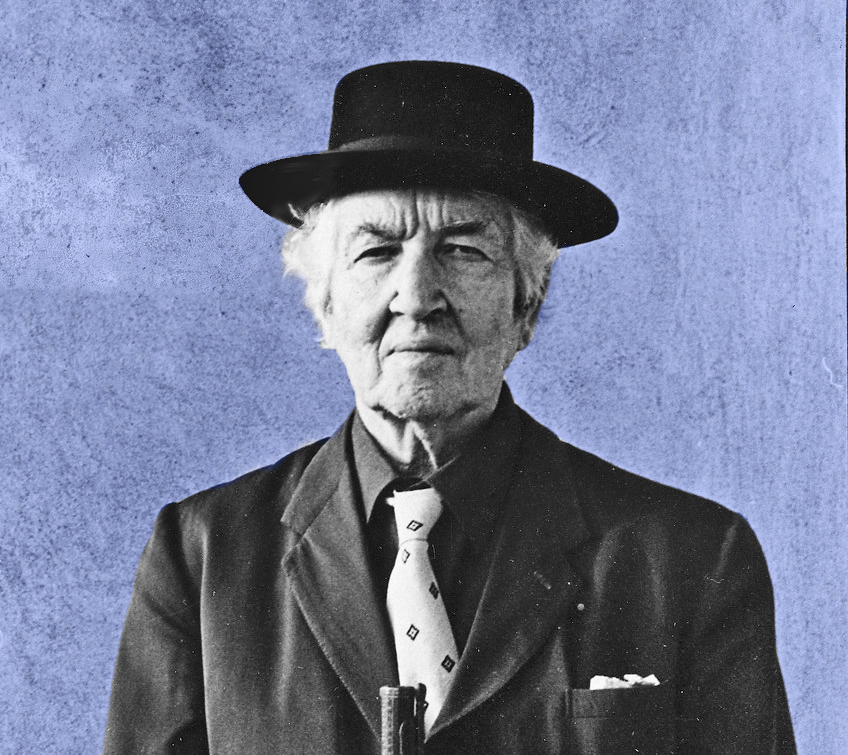
Robert Graves 

He was born in 1895 in Wimbledon, a suburb of London. He worked in many capacities. He was known as a poet, lecturer and novelist. He was also known as a classicist and a mythographer. His first known and revered poems were the poems Graves wrote behind the lines in World War One. He later became known as one of the most superb English language 'Love' poets. He then became recognised as one of the finest love poets writing in the English language. 

In Broken Images 

 He is quick, thinking in clear images;
 I am slow, thinking in broken images.
He becomes dull, trusting to his clear images;
I become sharp, mistrusting my broken images,
Trusting his images, he assumes their relevance;
Mistrusting my images, I question their relevance.
Assuming their relevance, he assumes the fact,
Questioning their relevance, I question the fact.
When the fact fails him, he questions his senses;
When the fact fails me, I approve my senses.
He continues quick and dull in his clear images;
I continue slow and sharp in my broken images.
He in a new confusion of his understanding;
I in a new understanding of my confusion.

What does the poet mean in his poem?
In this poem, Robert Graves the poet tries his best to give us the two different types of approaches towards life. The one who keeps on working continuously and keep on finding the solutions to problems. He should not be overconfident and have a selective view of life. One is the blind follower of the ready truths and concepts concocted either by the religion, politics, or society while the other believes in analysing and questioning what appears to be either a fact known or explained already by these institutions or a mystification or question needs to be resolved and determined by this person. The slow person becomes sharp whereas the sharp becomes dull by what he already knows. 

Explanation of "In Broken Images"
In this poem, Graves compares his reasoning to that of another person. He is of the view that the other person is able to solve problems faster than he is able to but he considers this as a weakness. This leads to his overconfidence.  It is a weakness according to Graves because there is too much trust placed on the already learnt or know facts.  The rules become second nature to the students, and the students succeed as a result. However, the important thing is to actually be able to understand why something is a rule or a “fact” because many rules have exceptions to them. Graves highlights the point that eventually the rules you were taught or the “facts” you were taught will fail and that is when it will have paid off to have analyzed every piece of information that was received.   

Theme of The Poem (Given in the textbook of first year)
A person should remain inquisitive about the images of life whether they are broken or clear. One, who trusts one’s clear images without proof, becomes dull in one’s life whereas the other who mistrusts his broken images becomes sharp and intelligent. Nothing should be taken for granted and one should remain thoughtful and considerate about the facts of life. Inquiry into the nature of things leads one to understand and accept the ground realities of life.

Tuesday, January 26, 2016

Lesson No. 15 - The Angel And The Author - And Others - (Original Text)

The Angel And The Author - And Others
By Jerome K. Jerome

       I had a vexing dream one night, not long ago: it was about a fortnight after Christmas. I dreamt I flew out of the window in my nightshirt. I went up and up. I was glad that I was going up. “They have been noticing me,” I thought to myself. “If anything, I have been a bit too good. A little less virtue and I might have lived longer. But one cannot have everything.” The world grew smaller and smaller. The last I saw of London was the long line of electric lamps bordering the Embankment; later nothing remained but a faint luminosity buried beneath darkness. It was at this point of my journey that I heard behind me the slow, throbbing sound of wings. 

          I turned my head. It was the Recording Angel. He had a weary look; I judged him to be tired. 
         “Yes,” he acknowledged, “it is a trying period for me, your Christmas time.” 
        “I am sure it must be,” I returned; “the wonder to me is how you get through it all. You see at Christmas time,” I went on, “all we men and women become generous, quite suddenly. It is really a delightful sensation.” 
        “You are to be envied,” he agreed. 
     “It is the first Christmas number that starts me off,” I told him; “those beautiful pictures—the sweet child looking so pretty in her furs, giving Bovril with her own dear little hands to the shivering street arab; the good old red-faced squire shovelling out plum pudding to the crowd of grateful villagers. It makes me yearn to borrow a collecting box and go round doing good myself. 
       “And it is not only me—I should say I,” I continued; “I don’t want you to run away with the idea that I am the only good man in the world. That’s what I like about Christmas, it makes everybody good. The lovely sentiments we go about repeating! the noble deeds we do! from a little before Christmas up to, say, the end of January! why noting them down must be a comfort to you.” 
        “Yes,” he admitted, “noble deeds are always a great joy to me.” 
      “They are to all of us,” I said; “I love to think of all the good deeds I myself have done. I have often thought of keeping a diary—jotting them down each day. It would be so nice for one’s children.” 
        He agreed there was an idea in this. 
       “That book of yours,” I said, “I suppose, now, it contains all the good actions that we men and women have been doing during the last six weeks?” It was a bulky looking volume. 
        Yes, he answered, they were all recorded in the book. The Author tells of his Good Deeds. 
         It was more for the sake of talking of his than anything else that I kept up with him. I did not really doubt his care and conscientiousness, but it is always pleasant to chat about one’s self. “My five shillings subscription to the Daily Telegraph’s Sixpenny Fund for the Unemployed—got that down all right?” I asked him. 
            Yes, he replied, it was entered. 
        “As a matter of fact, now I come to think of it,” I added, “it was ten shillings altogether. They spelt my name wrong the first time.” 
          Both subscriptions had been entered, he told me. 
      “Then I have been to four charity dinners,” I reminded him; “I forget what the particular charity was about. I know I suffered the next morning. Champagne never does agree with me. But, then, if you don’t order it people think you can’t afford it. Not that I don’t like it. It’s my liver, if you understand. If I take more—” He interrupted me with the assurance that my attendance had been noted. 
           “Last week I sent a dozen photographs of myself, signed, to a charity bazaar.” 
           He said he remembered my doing so. “Then let me see,” I continued, “I have been to two ordinary balls. I don’t care much about dancing, but a few of us generally play a little bridge; and to one fancy dress affair. I went as Sir Walter Raleigh. Some men cannot afford to show their leg. What I say is, if a man can, why not? It isn’t often that one gets the opportunity of really looking one’s best.” He told me all three balls had been duly entered: and commented upon. 
           “And, of course, you remember my performance of Talbot Champneys in Our Boys the week before last, in aid of the Fund for Poor Curates,” I went on. “I don’t know whether you saw the notice in the Morning Post, but—” 
            He again interrupted me to remark that what the Morning Post man said would be entered, one way or the other, to the critic of the Morning Post, and had nothing to do with me. “Of course not,” I agreed; “and between ourselves, I don’t think the charity got very much. Expenses, when you come to add refreshments and one thing and another, mount up. But I fancy they rather liked my Talbot Champneys.” 
          He replied that he had been present at the performance, and had made his own report. 
            I also reminded him of the four balcony seats I had taken for the monster show at His Majesty’s in aid of the Fund for the Destitute British in Johannesburg. Not all the celebrated actors and actresses announced on the posters had appeared, but all had sent letters full of kindly wishes; and the others—all the celebrities one had never heard of—had turned up to a man. Still, on the whole, the show was well worth the money. There was nothing to grumble at. 
           There were other noble deeds of mine. I could not remember them at the time in their entirety. I seemed to have done a good many. But I did remember the rummage sale to which I sent all my old clothes, including a coat that had got mixed up with them by accident, and that I believe I could have worn again. 
            And also the raffle I had joined for a motor-car. 
       The Angel said I really need not be alarmed, that everything had been noted, together with other matters I, may be, had forgotten.

Wednesday, January 20, 2016

Poem No. 19 - A Man of Words and Not of Deeds

A Man of Words and Not of Deeds 
Written By Charles Perrault (1628-1703)

A man of words and not of deeds, 
Is like a garden full of weeds, 
And when the weeds begin to grow, 
It’s like a garden full of snow. 
And when the snow begins to fall, 
It’s like a bird upon the wall. 
And when the bird away does fly, 
It’s like an eagle in the sky. 
And when the sky begins to roar, 
It’s like a lion at the door. 
And when the door begins to crack, 
It’s like a stick across your back. 
And when your back begins to smart, 
It’s like a penknife in your heart. 
And when your heart begins to bleed. 
And when your heart begins to bleed, 
You’re dead and dead and dead indeed. 
(Charles Perrault 1628-1703) 
Translated by Robert Samber

Vocabulary
A man words: A man who only talk without any practical involvement
Weeds: Unwanted wild plants
Roar: Roar Loud, deep sound as of a lion
Smart: Feel or cause a sharp pain
Penknifea small knife with a blade which folds into the handle.
Bleed: lose blood from the body as a result of injury or illness.
Indeedused to emphasize a statement or response confirming something already suggested.

Summary:

This poem is written by Charles Perrault and translated by Robert Samber. He says that a man who always talks and boasts, and does not do anything practically in any deed which beneficial for mankind is like a garden full of weeds. And when his this habit is once grown, it further aggravates the situation like snow in winter. Life passes through different phases and he is liked by no one in his social circle. Thus he finally comes to an end with the death of a person. It is, therefore, necessary that a man must always engage himself in some fruitful activity to make the life pleasant and useful for humanity. The poem gives us a lesson to be practical in every aspect of life.

Theme
One who is always busy in talking with excessive pride and self-satisfaction about one's achievements, and is not involved in any deed is like a garden full of weeds. And when it is once grown it further aggravates the situation like snow in winter. Life passes through different passes and ultimately comes to an end with the death of a person. It is , therefore necessary that a man must always engage himself in some fruitful activity to make the life pleasant and useful for humanity.

Moral Lesson
The poem "A Man of Words and Not of Deeds" teaches us that we should not waste our precious time in talking only. We should not misguide others by only showing ourselves as talketive. We should be practical and do positive actions for the sake of serving humanity.


Tuesday, January 19, 2016

Lesson No. The Gulistan of Sadi - Original Text)

The Original Text of "The Gulistan of Sadi"

Sheikh Saadi was a great storyteller. He speaks to all nations and is perpetually modern, said Emerson. He thought of the Gulistan as one of the bibles of the world, for he found in it the universality of moral law. The Gulistan translated in latin and English, became love for the people. It is interesting to note that English scholars used Sa’di’s translated parables in their divine books till it was discovered to be an English translation of a Latin version of Persian origin. Edwin Arnold has aptly described Gulistan in culinary terms as “an intellectual pilaf, a literary curry; a kebab of a versatile genius”. The readers are sure to enjoy these parables as food for thought. 

Once a king and a Persian slave were sailing in the same boat. The salve had never been at sea, and never experienced any calamity. After some-time the boat was hit by a storm and started tossing. It was very inconvenient for the passengers. All remained quiet except the slave who in fear of being drowned began to cry and tremble, and created inconvenience for the others. The other tried to pacify him by kindness and affection but he didn’t hear anybody. When the uneasiness lasted longer the king also became displeased.
In that boat there happened to be a sergeant, who said, “With’ your permission, may I quieten him”.
“It will be a great favour”, the king said.
The sergeant ordered the slave to be thrown into the water, so that he could have experienced the true danger of life. Two persons threw him in the sea and when he was about to be drowned they pulled him back to the boat, and he clung the stern with both of his hands. Then he sat down and remained quiet.
''This appeared strange to the king, who could not comprehend the wisdom in the action taken by the sergeant, and he asked for it. The sergeant replied: “Before he had experienced the danger of being drowned, he knew not about the safety of the boat. A man does not realize the worth of safety from the misfortune until he has tasted it.” 

 II 
It is related that while a deer was being roasted for Nushirvan, a king of Persia, famous for his justice, no salt could be found. A boy was sent to a village to bring some salt. The boy brought it and presented it to the king who asked whether he had paid for it. “No”, said the boy. “Pay for the salt”, said the king, “lest it should become a custom and the village be ruined.” Having been asked what harm could arise from such a trifling demand. “The foundation of oppression was small in the world”, said the king. “Whoever enlarged it, so that it reached its present magnitude, is at fault. If the king eats one apple from the garden of a subject, his slaves will pull down the whole tree. For five eggs, which the king allows to be taken by force, the people belonging to his army will put a thousand fowls on the spit.” A tyrant does not remain in the world, But the curse on him abides for ever! 

 III 
A king fell seriously ill and all hopes of his recovery vanished. The more the disease was cured the more it became painful. At last the physicians agreed that this disease could not be cured except by means of bile of a person endued with certain qualities. Orders were issued to search for an individual of this king. A son of a farmer was discovered to possess the qualities mentioned by the doctors. The king summoned the father and mother of the boy, whose consent he got by giving them a huge amount of wealth. The Qazi issued a decree to shed the blood of a person for the health of the king. The boy was brought to the altar and the executioner was directed to slaughter the boy. When all was ready the boy looked toward the sky and smiled. “Why do you laugh in such a posiotn?” the king asked. “A son looks to the affection of his parents,” said the boy. “If they fail, they are expected to bring the case before the Qazi to seek justice. But in the present case, the parents have agreed to get my blood shed for the trash of this world. The Qazi has issued a decree to kill me. The king thinks he will recover his health only through my slaying and I see no other refuge besides God Almighty. To whom shall I complain against your brutality, if I am to seek justice from your hand?” The king felt disturbed and on hearing these words he could not control his tears and said, “It is better for me to die than to shed the blood of an innocent boy.” He kissed the head and eyes of the boy and presented him with a lot of wealth. It is said that the king also recovered within a week.

Essay on "Faisal Mosque"

 The Faisal Mosque is one of the most iconic landmarks of Islamabad, the capital city of Pakistan. It is one of the largest mosques in the w...